Showing posts with label best. Show all posts

Friday, February 13, 2015

ONE WEEK RAW AND GLUTEN FREE DAY 2 Learn How To Make The Best Raw Gluten Free Dessert Ever!

Raw Chia Seed pudding with Cinnamon

Follow Foods For Long Life on FACEBOOK !

 DAY 2 OF "ONE WEEK RAW AND GLUTEN FREE"


I hope you enjoyed yesterdays menu but in case you missed it, check out DAY 1 OF ONE WEEK RAW AND GLUTEN FREE.

Before we get to todays menu, I want to make sure:
* youve finished dehydrating  the raw granola you started yesterday
* youve rinsing the lentil sprouts you started, twice a day
* youre drinking 8 cups of water each day
* youre taking B12, vitamin D and DHA omega 3 supplements

And, were going to make tomorrows dessert which is my absolute FAVORITE raw dessert - the amazing chia pudding! Most of the time I get lazy and make chia pudding with Vanilla Living Harvest Hemp milk which starts with a ready-made hemp milk that is also wonderful but not nearly as creamy. When you make it with raw cashews and cinnamon, it tastes like a creamy rice pudding with the consistency of tapioca. What could be better than that?

In addition, we will be preparing todays menu:
Breakfast: Anti-aging smoothie with frozen grapes and matcha green tea 
Snack: Leftover Waldorf salad (from yesterdays dinner)
Lunch: Raw split pea soup with shredded carrot and a big piece of watermelon or bowl of cherries leftover from yesterday
Dinner: Hearty taco salad
Dessert: A bowl of fresh blueberries

Lets get started!

Raw Chia seed pudding with Cinnamon (Old Favorite, modified)
Raw Vegan, Gluten Free
[makes 4 servings]
1/2 cup raw cashews, soaked for 4 to 6 hours and rinsed
3 pitted, jumbo Medjool dates soaked for 4 to 6 hours in 2 cups of water (reserve soak water)
1 teaspoon of vanilla 
1/2 teaspoon of cinnamon plus extra for topping
1 packet of stevia (optional for added sweetness)
1/4 cup chia seeds

Place cashews, dates, date soak water, vanilla, cinnamon and stevia in a high speed blender. Blend until smooth and creamy.
In a 1 quart bowl, combine cashew mixture with the chia seeds and stir vigorously with a fork for several minutes. 
Let mixture sit for 15 minutes and stir vigorously again until the chia seeds are well blended and no longer clump together. 
Once the mixture is well combined and no longer separating, place in the refrigerator for one day. 
Dust with more cinnamon and serve.

Per serving: 173.5 calories, 9.1 g fat, 1.3 g saturated fat, 1.8 g omega 3 and 1.7 g omega 6 fatty acids, 0 mg cholesterol, 4.1 g protein, 21.9 g carbohydrate and 5.8 g dietary fiber.

Chia seeds are a true longevity food.
They are rich in omega 3 fatty acids, calcium, fiber and protein!

Now for Todays Menu!

Breakfast - Anti-Aging Smoothie (Previously posted favorite)
Raw Vegan, Gluten Free
[makes 2 servings]
2 cups red or purple grapes, frozen (with or without seeds*)
2 teaspoons powdered matcha green tea
1 tablespoon ground flaxseeds
1 large or 2 small bananas
2 cups cold, filtered water
*  A high-speed blender, like a VitaMix, is needed if seeded grapes are used.

The night before, wash grapes and put in the freezer.
In the morning, combine all ingredients in a blender and process until smooth. Serve immediately.


 Per serving: 183 calories, 1.5 g fat, 0 g saturated fat, 0.8 g ALA omega 3 and 0.3 g omega 6 fatty acids, 0 mg cholesterol, 2.0 g protein, 43.5 g carbohydrates, and 4.0 g dietary fiber.


Matcha green tea will give you a little morning caffeine jolt.
Green tea has many benefits such as inhibiting cancer cells, stabilizing blood sugar, improving cholesterol profile, helping prevent heart disease, preventing tooth decay. Its anti-bacterial and anti-viral properties help fight colds and flu. Its catechin polyphenol EGCG is a powerful antioxidant.


For a snack, eat the leftover Waldorf salad from last nights dinner.

Lunch - Split pea soup with shredded carrot (Previously posted, modified) 
Raw Vegan, Gluten Free
[makes 2 servings]
2 cups fresh or frozen petite peas (if frozen, thaw before using)
1 cup chopped celery
2 tablespoons chopped onion
2 small cloves garlic
1 tablespoon extra virgin olive oil
2 tablespoons freshly squeezed lemon juice
1 teaspoon ground cumin
1 cup filtered water
1 teaspoon sea salt, more or less to taste
1 carrot, peeled and shredded
Freshly ground black pepper to taste


Place peas, celery, onion, garlic, oil, lemon juice, cumin, water and salt in a VitaMix or high speed blender and process until smooth. 
Place half of the shredded carrot in each of two bowls leaving a few tablespoons for garnish. 
Pour half of the blended soup in each bowl. With a spoon, mix the blended soup with the carrot. Top each bowl with the extra carrot and serve.


Per serving: 185.5 calories, 7.0 g fat, 1 g saturated fat, 0 g cholesterol, 6.5 g protein, 22 g carbohydrates and 7.5 g dietary fiber. 

Raw soups are quick and easy to make!
Eat with a big piece of watermelon or a bowl of cherries 
Dinner - Hearty Taco Salad (Modified to make it gluten free)
Raw Vegan, Gluten Free
[makes 2 servings]
For the dressing
1 teaspoon chia seeds
2 tablespoons water
1 tablespoon fresh cilantro, chopped
2 tablespoons freshly squeezed lime juice
1 tablespoon extra virgin olive oil
1/2 teaspoon sea salt
Pinch of cayenne pepper
For the taco meat
2/3 cup raw walnuts
2 teaspoons chili powder
2 teaspoons Bragg liquid aminos
For the salad
1 small head butter or red leaf lettuce, cleaned and torn into bite sized pieces
4 small tomatoes, cut into eighths
Kernels from 1 small ear of fresh corn
1 green onion, thinly sliced
1/2 medium avocado, sliced

To make the dressing, combine chia seeds with water. Set aside until it forms a gel (about an hour). Once it gels, add cilantro, lime juice, olive oil, sea salt and pepper. Set aside.
For the taco meat, put the walnuts, chili powder and liquid aminos in a food processor and briefly process until the mixture resembles taco meat. Do not over process. 
Prepare the salad by combining the lettuce, tomatoes, corn and green onion. Dress the salad with the lime chia seed dressing and place on two large plates. Top each salad with half of the avocado slices and half of the taco meat. 

Per serving: 474 calories, 39.2 g fat, 4.3 g saturated fat, 0 g cholesterol, 12.6 g protein, 29.2 g carbohydrates, 11.3 g fiber, 4.1 g omega 3 and 16.7 g omega 6 fatty acid.

Walnuts prepared in this way look and taste just like taco meat!


And for Dessert!
Tonight were going to have a big bowl of fresh blueberries for dessert. These little guys are packed with anthocyanidins which are powerful antioxidants. In fact, blueberries are one of the highest rated foods in their ability to destroy free radicals.

1 cup of blueberries has only 84 calories and provides a whopping 4 grams of dietary fiber. They are a very good source of vitamin C, vitamin K and manganese. They even contain omega 3 and 6 essential fatty acids!


Radiation Detox Smoothie Plus Best Natural Sources Of Iodine

A delicious smoothie with mildly detoxifying effects.
Safe to drink every day for general health and cleansing.

Follow Foods For Long Life on FACEBOOK
 

A Smoothie with Naturally Detoxing Ingredients
OK, maybe this isnt the green drink you expected to see on St. Pattys day but given the recent events in Japan, its probably a better choice.
On Monday I posted How your diet can help you avoid radiation poisoning where I mention foods that would help you detox should you be minimally exposed to radioactive contamination. Id like to follow up with a recipe for a smoothie that incorporates some of these important ingredients. Let me assure you that Im not living in a bunker nor am I duct taping my windows and doors (and neither should you be!).  Im just sharing some ideas for those of you who are concerned. As I mentioned on Monday, I do not see a need at this point to for anyone in the U.S. to take potassium iodide pills. Drinking a smoothie like this has mild detoxification properties which is appropriate at this time for the minimal risk of exposure in the U.S. so far. Its safe to drink everyday and is a healthful breakfast drink even when youre not worrying about radioactive contamination! 
The base of this smoothie is Living Harvests unsweetened Hemp Milk, rich in both omega 3 and omega 6 essential fatty acids needed for cell renewal after radiation exposure. An added shot of flaxseed oil provides lots more omega 3. 
Pectin can bind to radioactive particles and remove them from the body. This smoothie has two good sources of pectin: an apple and an orange. Use organic fruit and notice that the entire orange is used, including the skin where the highest concentration of pectin is found.
Kale is rich in chlorophyll which is said to reduce radiation toxicity. 
Please use stevia to sweeten the smoothie. For optimal detoxing, its important to avoid sugar, honey, agave and other natural sweeteners.


Leave the skin on the fruit for maximum pectin content.


An Excellent Superfood for your Smoothie
Vitamineral Green, by Healthforce Nutritionals, is a green powder that Ive used for years. Its ingredients are quite appropriate for a detoxifying smoothie. It contains high chlorophyll foods like spirulina, chlorella, barley grass, oat grass, wheat grass, kale, broccoli, spinach, parsley and more. It also provides seaweeds like Icelandic kelp, dulse, nori, alaria, and bladderwrack that are high in sodium alginate and iodine. Seaweed and sea vegetables are key in protecting against the absorption of radioactive material and in excreting it from the body. Since this product can initiate a detox reaction, I suggest starting out with 1 teaspoon per serving and building up to 1 tablespoon per serving after a few weeks.


Green Super Foods help the body heal itself. Vitamineral Green supports liver, kidneys, blood, bones, colon, circulation and immune function.


Best Sources of Iodine
Instead of searching for potassium iodide pills right now, there are many natural sources of iodine, most of which are seaweeds and sea vegetables. Here are some you can try. Remember the RDA is only 150 mcg per day but like many nutrients, the RDA is sadly on the low side. 


Source of Iodine
Amount of Iodine
Kombu, 1 inch piece
1,454 mcg
Hiziki, 1 tablespoon
    786 mcg
Arame, 1 tablespoon
    732 mcg
Kelp, (marine coast), 1 tablespoon
    595 mcg
Alaria, (marine coast), 1 tablespoon
    218 mcg
Agar Agar, 1 tablespoon
    120 mcg
Wakame, 1 tablespoon
      82 mcg
Dulse, (marine coast), 1 tablespoon
      68 mcg
Nori, 1 sheet
      40 mcg
Lavar, (marine coast), 1 tablespoon
      19 mcg

Detox Smoothie (Vegan)
[makes 2 servings]
1 1/2 cups Living Harvest unsweetened hemp milk
1/2 cup ice
1 medium organic apple, cored and cut into 8 pieces
1 medium organic orange, seeds removed and cut into 8 pieces
2 teaspoons Vitamineral green *
1 cup organic kale, stems removed and chopped
1 tablespoon cold pressed flaxseed oil
Stevia to taste (I used 1/8 teaspoon Sweet Leaf stevia sweetener)


* You can gradually build up to 1 to 2 tablespoons over a few weeks. You can also substitute spirulina or chlorella for Vitamineral green. See package details for suitable amounts.


Add ingredients to a Vitamix or other high speed blender and process until smooth.
Drink immediately.


Per serving (excluding green powder for which nutritional information is not available): 242.5 calories, 11.5 g fat, 1.3 g saturated fat, 4.5 g ALA omega 3 and 3.8 g omega 6 essential fatty acids, 0 mg cholesterol, 3.5 g protein, 29.3 g carbohydrates, 9.5 g fruit sugar, and 6.0 g dietary fiber.

Wednesday, February 11, 2015

Best Fish and Vegetarian Sources of Omega 3 Essential Fatty Acids

English walnuts—great vegetarian source of omega 3.

Salmon—excellent fish source of DHA and EPA omega3.

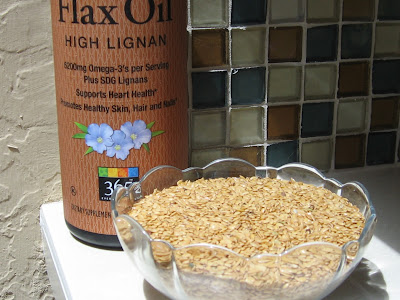
Flax seeds and oil. Highest vegetarian source of omega 3.
Raw chia seeds—high in omega 3 and fiber.

Raw hemp seeds—high in omega 3 and protein.

Over the past years, there has been increased emphasis on obtaining sufficient omega 3 fatty acids. This essential nutrient is needed for healthy arteries, brain development, proper immune function, reducing inflammation, preventing and managing heart disease, depression and joint pain. Symptoms of omega 3 deficiency are extreme fatigue, heart problems, poor memory, lack of concentration, depression, poor immunity, blepharitis (dry eyes), brittle hair and nails and dry skin. Besides taking a daily supplement of fish oil or flaxseed oil, many wonder how to get what they need. Today I want to discuss foods that provide the highest concentration of this essential nutrient.

There are three key omega 3 fatty acids: ALA (alpha-linolenic acid), DHA (docosahexaenoic acid) and EPA (eicosapentanenoic acid). DHA and EPA are the fatty acids that are the most beneficial to your health. The body can manufacture DHA and EPA from ALA. Unfortunately, some people are not capable of doing this conversion efficiently so if you are not a vegetarian, your best bet is to eat fish. Vegetarians must either take algae supplements that contain DHA and EPA or consume large quantities of ALA daily.


How Much Omega 3 do you need?

There are many different guidelines for essential fatty acids and I would guess that they will change as more is learned about their benefits. Here are some recommendations and observations:

• The Institute of Medicine, 2002, recommends 1.6 g of omega 3 for adult males and 1.1 g for adult females per day.

• The American Heart Association recommends that healthy people should eat oily fish at least twice a week in addition to consuming (vegetarian) foods rich in ALA. They also recommend that people with cardiovascular disease consume 1.0 g of DHA and EPA per day. (Why wait until you have heart trouble, maybe we should eat that much now!).
• Because vegetarians do not eat fish, the Vegetarian Society recommends 4 g of ALA per day in order for the body to manufacture sufficient quantities of DHA and EPA. Large quantities of omega 6 fatty acids can interfere with the body’s ability to do this conversion so a balance of about 4 to1 omega 6 to omega 3 is said to be beneficial. Omega 6 is abundant in commonly eaten foods such as peanuts, pine nuts, poppy seeds, sesame seeds, pumpkin and squash seeds, pecans, soybeans, almonds and safflower oil. Unfortunately, the typical American diet provides over ten times the required amount of omega 6.
• A study by the University of Pittsburgh Graduate School of Public Health showed that Japanese men having twice the levels of omega 3 fatty acids than white American men or Japanese Americans had the lowest levels of atherosclerosis. The average intake of Japanese people is about 2.6 g per day of omega 3, including 1 g per day of DHA and EPA (according to the Japan Society for Lipid Nutrition).

The Optimum Solution
With the objective of obtaining sufficient omega 3 fatty acids, the best thing to do for your health is eat plenty of low mercury fish for DHA and EPA and vegetarian foods high in ALA. The best fish to eat are salmon, herring, American Shad, Pacific and Atlantic mackerel, whitefish, Pacific oysters, Atlantic sardines and trout. The best vegetarian sources of ALA include flax seeds and flaxseed oil, chia seeds, hemp seeds and hemp milk products and English walnuts. For more details, read on…

Fish Rich in Omega 3 (DHA and EPA) and Low in Mercury (Sources for this data include (1) Nutritiondata.com (2) Appendix G2. Description of USDA Analyses, High Omega 3 Fish Analysis and (3) NRDC Consumer Guide to Mercury in Fish).

• Salmon is one of the best sources of omega 3, especially in DHA and EPA, while being very low in mercury. Atlantic is the best, both farmed and wild, with 3 dry cooked ounces providing 2.2 g (wild) and 1.9 g (farmed) of omega 3. Most of the omega 3 is in the form of DHA and EPA with 1.6 g in wild and 1.8 g in farmed. Chinook is also very good with 1.8 g of omega 3, 1.5 g of which is DHA and EPA. Pink salmon is next with 1.2 g omega 3 (1.1 g DHA and EPA) followed by canned sockeye with 1.1 g omega 3 (1.0 g DHA and EPA). Wild Coho is lower than the other salmon mentioned but still contains a respectable 0.9 g of omega 3, almost all of which is DHA and EPA.

• Herring is another excellent source of omega 3 fatty acids. Three ounces of dried cooked Pacific herring contains 2.0 g of omega 3 (1.8 DHA and EPA) while Atlantic herring weighs in at 1.9 g (1.7 DHA and EPA). It also contains very little mercury and is a very good source of vitamin B12 and selenium
• American Shad, found in the Connecticut River, is a local favorite. A 3 ounce serving (raw weight) contains 2.3 g of omega 3 (2.0 g DHA and EPA) and is also a very good source of niacin and selenium. Shad is also a low mercury fish.
• Pacific Mackerel and Atlantic Mackerel are both very good sources of omega 3 and contain little mercury. A 3 ounce dry cooked serving of Pacific mackerel contains 1.8 g of omega 3 (1.6 g DHA and EPA) while a similar serving of Atlantic mackerel has 1.2 g (1.0 g DHA and EPA). They both also provide niacin, vitamin B12 and selenium. Although Spanish mackerel is also a good source of omega 3, it is high in mercury. King mackerel is not a good source of omega 3, has a very high level of mercury and should be avoided.
• Whitefish packs in 1.7g of omega 3 (1.5 g DHA and EPA). It can be enjoyed regularly as it contains little mercury.
• Pacific Oysters are one of my favorites. A 3 ounce serving provides 1.3 g of omega 3 (1.2 g DHA and EPA). They are also a very good source of vitamin B12, iron, zinc, copper, manganese and selenium and are very low in mercury. For those of us who mostly eat a vegetarian diet with occasional seafood, oysters are a good pick because they provide B12, iron and zinc. These nutrients are more difficult to get from the plant kingdom.
• Atlantic Sardines, canned in oil, are a good source of omega 3 in the pantry. A 3 ounce serving yields 1.2 g omega 3 (0.8 g DHA and EPA). It contains little mercury and is a very good source of vitamin D, B12, phosphorous and selenium
• Trout, both wild and farmed, are good sources of omega 3, both providing about 1.0 g per dry cooked 3 ounce serving. Farmed contains 1.0 g of DHA and EPA while its wild counterpart provides 0.8 g. Both are very good sources of B12 and niacin.

Not All Farmed Fish are Alike
I typically avoid farmed fish but wild fish is often expensive to buy and sometimes harder to find. I had a long discussion with the people at Whole Foods last night and I feel much more comfortable about eating their farmed fish (in fact I bought some farmed salmon for the first time in years). Here are the standards that Whole Foods uses for their farmed fish:

• Prohibit the use of antibiotics and growth hormones or animal by-products in their feed.

• No “Franken fish”—genetically modified or cloned seafood.
• Free from preservatives.
• Fish are in low-density pens.


What about Tuna? Why didn’t this Popular Fish make the High Omega 3 List?
Without a doubt, a tuna fish sandwich is one of the most popular lunches in America. Ahi tuna is also served in seafood restaurants and sushi bars throughout the country. As far as being a good source of omega 3 and safe from mercury, here’s what I have found out.

• Light Canned Tuna in water is not very high in omega 3. Although it’s moderate in mercury content and can be eaten up to 6 times a month safely (according to the Environmental Protection Agency’s guide for pregnant women), you’d have to eat ten 3 ounce servings to get the same amount of omega 3 as a single serving of wild Atlantic salmon.

• White or Albacore Canned Tuna in water has more omega 3 than light canned tuna (0.8 g per 3 ounce serving vs. 0.2 g), most of which is DHA and EPA (0.7 g). Unfortunately, it is high in mercury and should be limited to three or less servings a month by those at risk from mercury exposure ((pregnant women, women trying to get pregnant and children).
• Ahi Tuna, also known as Yellow-fin or Big-eye, is the worst choice. It is low in omega 3 (less than 0.3 g), has the highest mercury content and should be avoided completely by those at risk from mercury exposure.

Excellent Vegetarian Sources of ALA Omega 3 Fatty Acid - Always Better Raw and Organic

• Flax Seeds have long been known for their high content of omega 3 weighing in at 6.3 g per 1 ounce serving. They are high in fiber (8.0 g per ounce) and are a very good source of thiamine and manganese. The omega 6 content is low at only 1.7 g per ounce so if you are trying to balance out the high omega 6 content of your diet, eating flax seeds is a good way to do it. One teaspoon of flaxseed oil contains 2.0 g of omega 3 and only 0.5 g of omega 6.

• Chia Seeds provide 4.9 g of omega 3 per ounce and only 1.6 g of omega 6. Chia seeds are very high in fiber (11 g per ounce) and are a very good source of manganese, phosphorus and calcium.
• Hemp Seeds are a very affordable source of protein, providing over 10 g per 1 ounce serving. They provide 2.8 g of omega 3 for every 7 g of omega 6 yielding a favorable 2.5:1 omega 6 to omega 3 ratio. You can get the same benefits of hemp seeds from hemp milk and even hemp ice cream (just bought this new yummy ice cream called Temp by Living Harvest Foods).
• English Walnuts have an optimal omega 6 to omega 3 ratio of 4.2:1. They provide 2.5 g of omega 3 and 10.7 g of omega 6 per one ounce serving. English walnuts are a very good source of manganese. Do not confuse them with black walnuts that only provide 0.6 g of omega 3 and contain over 16 times as much omega 6 as omega 3.

I hope you have found this information useful. I devoted a lot of time on this because I think the low amounts of omega 3 in the American diet contribute greatly to the increasing level of illness and exploding costs of healthcare. So go and grab a handful of English walnuts, grill some salmon and top your meal off with a bowl of hemp milk ice cream!

Tuesday, February 10, 2015

Before You Reach For The Iceberg Lettuce Select The Best Greens For Your Salad!

 Iceberg lettuce is crisp and delicious but not a nutritional star.

Follow Foods For Long LIfe on FACEBOOK .

Salad Greens
When I was a kid, we ate a salad with every meal. It was always the same - iceberg lettuce, tomatoes, vinegar and oil. There really wasnt much choice of salad greens in the super market back then. Today, of course, you can walk down an entire isle of salad green options - besides iceberg you may find romaine, butter lettuce, red leaf, green leaf, arugula, spinach and so on. And many are offered both organically or conventionally grown! So how are we to choose?

Taste preference is always a major factor. Arugula or rocket, has a slightly bittier or peppery taste. Lettuce has a more subtle flavor and often takes on the flavor of the salad dressing. Salad greens are also selected for their distinct textures. Romaine is crunchy while butter lettuce (also known as Boston or bibb lettuce), red leaf and green leaf have a more delicate texture. Salad greens also vary in their nutritional content.

Nutritional Comparison of Salad Greens
All salad greens are very low in calories (less than 10 calories per ounce), and have no saturated fat or cholesterol. They are also extremely low in sodium. Although they may not seem to be contain high amounts of vitamins and minerals, on a per calorie basis, they are very nutrient dense.  Heres how these salad greens differ in several beneficial nutrients:

Vitamin A
This fat-soluble, antioxidant vitamin is important for vision, growth and development, healthy skin and a strong immune system. If you have night blindness, dry skin or just want to boost up your immunity and want a salad green with the highest amount of vitamin A, your best choice would be romaine or spinach - just two ounces would provide your entire daily requirement. Red and green leaf lettuces are also a very good choice. Iceberg on the other hand only provides 3% of your daily requirement per ounce.

One ounce of Romaine lettuce is only 5 calories and provides:

2439 IU vitamin A
7 mg vitamin C
29 mcg vitamin K
38 mcg folate
9 mg calcium

Vitamin C
Vitamin C is also an antioxidant and supports a healthy immune system, teeth and gum health and the formation of collagen (thats what keeps our skin from sagging ladies!). It also enhances the absorption of iron. If you bruise easily or have other signs of capillary weakness, once again romaine and spinach are the best choices for their vitamin C content - two ounces provides about one quarter of your daily requirement. Since vitamin C is very heat sensitive, eating a big raw salad is a good way to get it. Make sure and include a sliced, raw, red bell pepper - one of the best sources of this vitamin (1 cup of sliced red bell pepper provides twice your daily requirement!)  

Butter lettuce is only 4 calories per ounce and provides:

927 IU vitamin A
only 1 mg vitamin C
29 mcg vitamin K
20 mcg folate
10 mg calcium

Vitamin K
Although most people arent deficient in this important vitamin, some people are - like those suffering from Crohns or other diseases that effect absorption in the digestive tract or those taking certain drugs that interfere with it. This fat-soluble vitamin is essential for the regulation of blood clotting and is also very important for bone health. Spinach has a high concentration of vitamin K (135 mcg/ounce), 1 ounce providing more than the daily requirement for a man (120 mcg/day) or a woman (90 mcg/day). Those of you on warfarin (Coumadin), a blood-thinning medication, may want to avoid foods this high in vitamin K. If thats the case, the other lettuces are better choices than spinach.

One ounce of Red Leaf lettuce has only 5 calories and provides:
2098 IU vitamin A
only 1 mg vitamin C
39 mcg vitamin K
10 mcg folate
9 mg calcium
Although red leaf lettuce, with its deep colors, looks more nutritious, green leaf lettuce is higher in vitamins C & K, folate, calcium and potassium. 
One ounce of Green Leaf lettuce has only 5 calories and provides:
2073 IU vitamin A
5 mg vitamin C
49 mcg vitamin K
11 mcg folate
10 mg calcium

Folate
Folate plays a key role in amino acid metabolism and DNA synthesis. It is essential during pregnancy in preventing neural tube defects. If its folate that you are after, spinach is a good choice with each ounce providing 14% of the daily requirement with romaine coming in a close second (one ounce providing 10%). 

Its important to note that folate can mask vitamin B12 deficiency so raw food vegans, who eat lots of high folate foods and little or no B12-rich foods, can be B12 deficient for a dangerously long time without noticing it.

Arugula, or Rocket,  is 7 calories per ounce and provides:

664 IU vitamin A
4 mg vitamin C
30 mcg vitamin K
27 mcg folate
45 mg calcium

Calcium
Calcium is the most abundant mineral in the body. It is important for bone and tooth development as well as muscle contraction and nerve transmission. Although salad greens arent a huge source of calcium, the salad green with the most calcium is arugula. A 4 ounce arugula salad provides 180 mg of calcium. More important, its an alkaline food which doesnt draw calcium from the body like dairy sources which are acidic and cause the body to draw calcium from your bones for neutralization.
Although spinach is fairy high in calcium, it is also high in oxalates which reduce the absorption and retention of this critical mineral. To reduce the oxalic content, its best to eat spinach cooked.

Spinach is 6 calories per ounce and provides:
2625 IU vitamin A
8 mg vitamin C
135 mcg vitamin K
54 mcg folate
28 mg calcium

So How Does Iceberg Lettuce Stack Up?
This old favorite isnt completely devoid of all nutrients - its just not nearly as high as others. 
It contains only 1/17th the vitamin A as romaine, 1/8th the vitamin C as spinach, 1/14th the vitamin K as green leaf lettuce, and 1/11th the calcium as arugula .

Iceberg lettuce is 4 calories per ounce and provides only:
141 IU vitamin A
1 mg vitamin C
7 mcg vitamin K
8 mcg folate
5 mg calcium

How they rank
Of course their ranking depends on the nutrient you are the most deficient in - but overall, for a raw salad, romaine and arugula are the best nutritionally.
Red and green leaf are next in line followed by butter leaf.
Although spinach is an excellent source of many key vitamins and minerals, its better prepared cooked to lessened the effect of calcium robbing oxalates.
As you may have guessed, iceberg comes in dead last. 


Monday, February 9, 2015

The best Excercis you can try to lose weight

If someone told you right now what the absolute best exercise to lose weight was, would you do it? You might when you read this. Drum roll, please!

The best exercise to lose weight is: "the exercise youll do," says Timothy Church, MD, MPH, PhD, a professor at Pennington Biomedical Research Center in Baton Rouge, La.


Other experts interviewed by WebMD said much the same thing about weight loss workouts.

"The two things that stop people from losing weight with exercise are either boredom or injury," says physical therapist and strength and conditioning specialist Ben Quist, PhD, NSCA.

The truth is that weight loss is about creating a calorie deficit -- in other words, burning more calories than you take in. So, they say, while running at an 8-minute-mile pace might be a great calorie burner, if youre not going to do it, its not going to help you. Instead, start with something you can do, like walking or working out on an elliptical machine or exercise bike.

The Beef on Strength Training

In all cases, however, youll burn more calories with cardio (aerobic) exercise than with strength or resistance training.

"Strength training itself will not lead to an appreciable amount of weight loss because it just doesnt burn enough calories," says Glenn Gaesser, PhD, FACSM, kinesiology professor and department head at the University of Virginia in Charlottesville.

But what about all that talk that more muscle mass equates to more calories burned, even when youre at rest?

"Its a myth. Its not going to happen," says Gaesser.

The only successful studies to show a significant calorie burn following a weight-lifting workout (afterburn) were done with serious lifters, working out for 60 to 90 minutes at a time and lifting as much as they could on every set.

In fact, Gaesser says, at best, gaining one pound of muscle will help you burn 5 to 10 extra calories a day. You could do that chewing gum.

Thats not to say that strength training isnt important for the overall health of the body. But when it comes to burning the most calories, go for cardiovascular exercise. And vary the intensity, says Quist.

"Do aerobic base-building workouts," he says, where you alternate between moderate and higher intensity, either within the same workout or on alternate days.

Quist also recommends cross-training -- that is, doing a range of different activities during your workouts. Not only does this help you keep from getting bored, its better for your body. Doing different activities recruits different muscle groups. Youre also less likely to develop an injury, says Quist, since doing the same thing day after day creates wear patterns on your joints.

Get creative, says Gaesser, whose graduate students teach an entire class on novel ways to burn calories. For example, he says, if youre a golfer, ditch the cart and walk with your clubs. Youll do what you love -- and burn more calories.

Exercise Is Just One Piece of the Puzzle

Keep in mind that exercise is just one portion of a successful weight loss program, say experts.

"Eating and exercise are not separate issues," says Church. "Theyre intimately connected. Too many people think these large doses of exercise are an excuse to eat whatever you want."

Unfortunately, today food is everywhere. There are candy bars at Home Depot and cheesecakes at Barnes & Noble. Gaesser says his kids cant believe a gas station used to be just a place to get gas. And portions are out of control, says Church -- just look at the size of the plates at restaurants.

"Its so much easier not to eat calories than to burn them off," says Quist.

And keep in mind that the definition of successful weight loss is keeping the weight off.

"Its not hard to lose weight," says Church. "Anyone can lose weight. Whats hard is keeping it off. Those that combine both diet and exercise keep it off."

But what about metabolism? Many people who have struggled to lose weight believe they have unusually slow metabolisms.

Chances are, "you dont have a slow metabolism," says Church. "It is so rare that of all the metabolisms weve checked (and he does this daily), I cant remember one being legitimately slow."

The truth is, he says, "bigger people have a higher metabolism because theyre bigger. Metabolism is how much mass you have. The more mass you have, the more energy you burn just sitting around."

How Much Do I Need to Exercise for Weight Loss?

Do the math: You need to burn 3,500 calories to lose a pound. So if youre burning 300 calories in one workout, it will take you nearly 12 workouts to lose one pound. If you cut your calorie intake by 300 calories in addition to burning 300, it will take you half as long to lose a pound.

If you want to lose weight, shoot for at least 200 minutes (more than three hours) a week of moderate intensity exercise with everything else consistent, says Church. If you cut calories and exercise, he says, you can get away with a minimum dose of 150 minutes (2 1/2 hours) a week.

If youre a beginner, says Gaesser, start with 50 minutes of exercise a week and work up to 200.

"You didnt put on that 20 pounds in the last six months; youre not going to take it off in six months," says Church.

"People dont want to hear about the patience aspect," he says. "They want instant gratification. But the cold, hard reality is if you want to lose weight and keep it off, its work. No one loses weight and keeps it off without trying."

Here are eight tips to help you adhere to a weight loss workout and meet your goals.
  • Have an exercise buddy or partner. This is a must, according to the experts who spoke with WebMD. Having accountability to someone else, even if its your Labrador, keeps you honest. "Its much easier to say no to yourself than to someone else," says Gaesser, who goes for bike rides regularly with friends.
  • Schedule your workouts. Keep a calendar that lists specific times for your workouts, says Gaesser. Make an appointment with exercise ahead of time, and you wont have the excuse of running out of time.
  • Weigh yourself daily. This is one of the best tools to see if youre slipping up, Church says. Weighing yourself daily can keep you on track so that you dont let 300 extra calories a day or one missed workout set you back.
  • Dont do too much, too fast. Dont get over-motivated, warns Quist. Lifting weights that are too heavy or starting out with six days a week of aerobic exercise is a mistake, says Quist. "People end up hurting themselves in the first week and then they give up," he says.
  • Log your steps. Logging the time that you work out will help you achieve your weekly goal, even if you get off track one day, Church says. It will also inspire you at the end of the week, when you can look back and see what youve accomplished.
  • Cook more often. Portions, and calories, are out of control when you eat out, says Church. Youll almost always consume fewer calories in a meal cooked and eaten at home. Save restaurants for special occasions, and get together with friends for a walk instead of a meal.
  • Dont turn water into wine. Not only does a glass of wine or beer add a couple hundred extra calories, after a few glasses, youre not as conscious of consuming more calories in your meal. You dont have to give up drinking, says Church, but do cut back.
  • Beware the one-way valve. You walk past the hors doeuvres at a party, grab some cheese and crackers, and quickly consume 300 calories before dinner even starts. "We have no problem randomly over-consuming extreme amounts of calories," says Church, "but we never randomly, sporadically have extreme bouts of caloric expenditure."

Lose Weight with 17 best tips for you from Dietdoctor

Do you have trouble losing weight? Or would you like to lose it faster? Here are the 17 best tips for you.
For some people losing all of their excess weight is easier said than done. But there are many common errors people make. Correcting them can restart or speed up your weight loss.
Based on a decade of experience treating obese patients, reading studies, going to obesity conferences and discussing this topic with the world’s biggest experts, here’s my best advice for maximizing your weight loss.
Start at the top of the list (most important) and go down as far as you need. Perhaps you only need the first piece of advice?

How to Lose Weight

  1. Choose a low carb diet
  2. Eat when hungry
  3. Eat real food
  4. Measure your progress wisely
  5. Be patient
  6. Women: Avoid fruit
  7. Men: Avoid beer
  8. Avoid artificial sweeteners
  9. Review any medications
  10. Stress less, sleep more
  11. Eat less dairy products and nuts
  12. Supplement vitamins and minerals
  13. Exercise smart
  14. Achieve optimal ketosis
  15. coming soon
  16. coming soon
  17. coming soon

1. Choose a Low Carb Diet

If you want to lose weight you should start by avoiding sugar and starch (like bread). This is an old idea: For 150 years or more there have been an infinite number of weight loss diets based on eating less carbs. What’s new is that at least 17 modern scientific studies have proven that, yes, low carb is the most effective way to lose weight.


Obviously it’s still possible to lose weight on any diet – just eat less calories than you burn, right? The problem with this simplistic advice is that it ignores the elephant in the room: Hunger. Most people don’t like to “just eat less”, i.e. being hungry forever. That’s dieting for masochists. Sooner or later a normal person gives up and eats, hence the prevalence of “yo-yo dieting”.

The main advantage of low carb diets is that they cause you to want to eat less. Even without counting calories most overweight people eat far fewer calories on low carb. Sugar and starch may increase your hunger, avoiding it may decrease your appetite to an adequate level. If your body wants to eat a suitable number of calories you don’t need to bother counting them. Thus: Calories count, but you don’t need to count them.

A 2012 study also showed that people on a low carb diet burned 300 more calories a day – while resting! According to one of the Harvard professors behind the study this advantage “would equal the number of calories typically burned in an hour of moderate-intensity physical activity”. Imagine that: an entire bonus hour of exercise every day, without actually doing it.

Bottom line: A low carb diet reduces your hunger and makes it easier to eat less. And it might even increase your fat burning at rest. Study after study show that low carb is the smart way to lose weight and that it improves important health markers.
How to do it: LCHF for beginners
Inspiration: Weight loss stories on low carb

2. Eat When Hungry

Don’t be hungry. The most common mistake when starting a low carb diet: Reducing carb intake while still being afraid of fat. The problem is that carbs and fat are the body’s two main energy sources. It needs at least one.

Low carb AND low fat = starvation
Avoiding both carbs and fat results in hunger, cravings and fatigue. Sooner or later people can’t stand it and give up. The solution is to eat more natural fat until you feel satisfied. For example:
  • Butter
  • Full-fat cream
  • Olive oil
  • Meat (including the fat)
  • Fatty fish
  • Bacon
  • Eggs
  • Coconut oil, etc.
Always eat enough, so that you feel satisfied, especially in the beginning of the weight-loss process. Doing this on a low carb diet means that the fat you eat will be burned as fuel by your body, as your levels of the fat storing hormone insulin will be lowered. You’ll become a fat burning machine. You’ll lose excess weight without hunger.
Do you still fear saturated fat? Don’t. The fear of saturated fat is based on obsolete theories that have been proven incorrect by modern science. Butter is fine food. However, feel free to eat mostly unsaturated fat (e.g. olive oil, avocado, fatty fish) if you prefer. This could be called a Mediterranean low carb diet and works great too.
Eating when hungry also implies something else: If you’re not hungry you probably don’t need to eat yet. When on a LCHF diet you can trust your feelings of hunger and satiety again. Feel free to eat the number of times per day that works best for you.
Some people eat three times a day and occasionally snack in between (note that frequent snacking could mean that you’d benefit from adding fat to your meals, to increase satiety). Some people only eat once or twice a day and never snack. Whatever works for you. Just eat when you’re hungry.

3. Eat Real Food

Another common mistake when eating a low carb diet is getting fooled by the creative marketing of special “low carb” products. Remember:  An effective low carb diet for weight loss should be based on real food, like this:


Real food is what humans have been eating for thousands or (even better) millions of years, e.g. meat, fish, vegetables, eggs, butter, olive oil, nuts etc.
If you want to lose weight you’d better avoid special “low carb” products that are full of carbs. This should be obvious but creative marketers are doing all they can to fool you (and get your money). They will tell you that you can eat cookies, pasta, ice cream, bread and plenty of chocolate on a low carb diet, as long as you buy their brand. They’re full of it. Don’t be fooled.

Here are three examples of what to avoid:

  1. Atkins’ Fairy Tale Cookies
  2. Julian Bakery’s High Carb Low Carb Bread
  3. The Dreamfields Pasta Fraud
These three companies are not unique. There are thousands of similar companies trying to trick you into buying their “low carb” junk food, full of starch, sugar alcohols, flour, sweeteners and strange additives. Two simple rules to avoid this junk:
  • Don’t eat “low carb” versions of high carb stuff, like cookies, bars, chocolate, bread, pasta or ice cream – unless you are SURE of the ingredients (perhaps by making it yourself).
  • Avoid products with the words “net carbs” on them. That’s usually just a way to fool you.
Focus on eating good quality, minimally processed real food. Ideally the food you buy shouldn’t even have a list of ingredients (or it should be very short).

4. Measure Your Progress Wisely

Tracking successful weight loss is sometimes trickier than you think. Focusing only on weight and standing on the scale every day might be misleading, cause unnecessary anxiety and undermine your motivation for no good reason.
The scale is not necessarily your friend. You may want to lose fat – but the scale measures muscles, bone and internal organs as well. Gaining muscle is a good thing. Thus weight or BMI are imperfect ways to measure your progress. This is especially true if you’re just coming off a long period of semi-starvation (calorie counting), as your body may want to restore lost muscles etc. Starting weight training and gaining muscle can also hide your fat loss.

Losing fat and gaining muscles is great progress, but you may miss it if you only measure your weight. Thus it’s smart to also track the disappearance of your belly fat, by measuring your waist circumference.

Here’s how to do it:
  1. Put the measuring tape around your middle, like in the picture above, slightly above your belly button (to be exact: at the midpoint between your lowest rib and the top of your hipbone, at your side).
  2. Exhale and relax (don’t suck in your stomach).
  3. Make sure the measuring tape is snug, without compressing your skin.
  4. Measure
Compare your result to these recommendations:
I recommend aiming for “excellent” but it’s not always realistic. Young people can usually achieve it, but for some middle-aged or older women it may be a major victory to get all the way to “decent”.

Measuring progress

I suggest measuring your waist circumference and weight before starting and then perhaps once a week or once a month. Write the results down so that you can track your progress. If you want you can measure more areas: around the buttocks, the chest, the arms, legs, etc.
Note that your weight can fluctuate up and down several pounds from day to day, depending on fluid balance and stomach contents: Don’t worry about short term changes, instead follow the long-term trend.
If you can, try to check other important health markers when starting out, like these:
  • Blood pressure
  • Blood sugar (fasting blood glucose and/or HbA1c)
  • Cholesterol profile (including HDL, triglycerides)
These markers are almost universally improved on a low carb diet, even before major weight loss. Re-checking these health markers after a few months can be great for your motivation as they’ll usually show that you’re not just losing weight, you’re gaining health too.
PS: Don’t have a measuring tape at home? Try these options:
  • Use any piece of string. Wrap the string around your waist and clip off the extra on day one. This string could magically appear to become longer and longer every week you wrap it around your waist. 
  • Comparing how an old pair of jeans fit is also a decent option.

5. Be Patient


It usually takes years or decades to gain a lot of weight. Trying to lose it all as quickly as possible by starving yourself rarely works well long-term, that’s just the recipe for “yo-yo dieting”. To succeed you need something that works long term.

What to aim for

It’s common to lose 2-6 pounds (1-3 kg) within the first week on a strict low carb diet, and then on average about one pound (0.5 kg) per week as long as you have a lot of weight remaining to lose. This translates into about 50 pounds (25 kilos) per year.
Every 5 pounds of fat loss roughly equals 1 inch lost around the waist (1 kilo = 1 cm).
Young males sometimes lose weight quicker than this, perhaps twice as fast. Post-menopausal women may lose it at a slightly slower pace. People eating a very strict low carb diet may lose weight quicker, as well as those who exercise a lot (a bonus). And if you have an enormous amount of excess weight to lose you could start out much faster.
As you get closer to your ideal weight the loss slows, until you stabilize at a weight that your body feels is right. Hardly anyone gets underweight on a low carb diet – as long as they eat when hungry.
Examples: Weight loss stories.

Initial stalls

Are you coming off a period of semi-starvation (calorie counting)? Focus on your waist circumference and health markers (see advice #4) at first as it sometimes takes several weeks before weight loss is apparent.

Weight loss plateaus

Expect weight loss plateaus: Days or weeks where nothing seems to happen on the scale. Everybody gets them. Stay calm. Keep doing what you’re doing and eventually things will start happening again (if not, check the other 16 tips).

How to lose weight forever

Losing a lot of weight long-term and keeping it off forever won’t happen unless you change your habits forever. If you lose weight and then return to living exactly the way did when you gained weight, don’t be surprised when the excess weight returns. It will.
Maintaining weight loss requires long-term change and patience. If this doesn’t seem possible for you, then you’re perhaps more interested in one of these magical diet scams.
Forget quick fixes: If you lose some weight every month, eventually you’ll get rid of all your excess weight. That’s inevitable progress. That’s what you want.
PS: Long-term change is only hard in the beginning, especially during the first couple of weeks. It’s like quitting smoking. Once you develop new habits it becomes easier and easier every week. Eventually it comes naturally.

How to lose weight faster

Keep reading these tips!

6. Women: Avoid Eating Fruit


This is a tip that goes for men as well, of course, but eating fruit is a more common obstacle for women trying to lose weight.

This advice is controversial as fruit has an almost magical health aura today. People may believe that fruit is nutritious but unfortunately fruit contains a lot of sugar – around 10% by weight (the rest is mostly water). Just taste an orange or a grape. Sweet, right?
Five servings of fruit per day is equivalent to the amount of sugar in 16 ounces of soda (500 ml). Contrary to what many people believe the sugar is more or less identical (about 50% glucose, 50% fructose).
Sugar from fruit can shut down fat burning. This can increase your hunger and slow your weight loss. For best results avoid fruit – or enjoy it occasionally as a treat.

Bottom line: Fruit is candy from nature.


7. Men: Avoid Drinking Beer

This applies to women too, but men drink more beer on average. Beer contains rapidly digested carbs that shut down fat burning. That’s why beer is sometimes referred to as “liquid bread”. There’s a good reason for the term “beer belly.”
Here are smarter alcoholic options for losing weight:
  • Wine (red or dry white)
  • Dry champagne
  • Pure spirits like whiskey, cognac, vodka (avoid sweetened cocktails – try vodka, soda, lime instead)
These drinks hardly contain any sugar/carbohydrates so they’re better than beer. However, large amounts of alcohol might slow weight loss somewhat, so moderation is still a good idea.

8. Avoid Artificial Sweeteners


Many people replace sugar with artificial sweeteners in the belief that this will reduce their calorie intake and cause weight loss. It sounds plausible. Several studies, however, have failed to show any positive effect on weight loss by consuming artificial sweeteners instead of plain sugar.
Instead, according to scientific studies, artificial sweeteners can increase appetite and maintain cravings for sweet food.
This could be because the body increases insulin secretion in anticipation that the sugar will appear in the blood. When this doesn’t happen, blood sugar drops and hunger increases. Whether this chain of events regularly take place is somewhat unclear. Something odd happened when I tested Pepsi Max though, and there are well-designed studies showing increased insulin when using artificial sweeteners.
Furthermore, artificial sweeteners can maintain an addiction to sweets and lead to snack cravings. And the long term effects of consuming artificial sweeteners are unknown.
By the way, Stevia is marketed as a natural alternative to artificial sweeteners. That’s marketing talk. There is nothing natural about a processed super-sweet white powder like Stevia.
If you’re having trouble losing weight I suggest that you completely avoid sweeteners. As a bonus you’ll soon start to enjoy the natural sweetness of real food, once you’re no longer adapted to the overpowering artificial sweetness of junk food and “diet” sodas.

9. Review Any Medications

Many prescription drugs can stall your weight loss. Discuss any change in treatment with your doctor. Here are the worst three:
  • Insulin injections, especially at higher doses,are probably the worst obstacle for weight loss. There are three ways to reduce your need for insulin:
    A. Eat less carbs, which makes it a easier to lose weight. The less carbs you eat the less insulin you need. Remember to lower your doses if you can.
    B. If this isn’t enough, treatment with Metformin tablets (at a dose of 2 grams – 3 grams/day) can decrease the need for insulin (at least for type 2 diabetics).
    C. If this is not enough to get off insulin (again, for type 2 diabetics) you could try newer promising drugs like Victoza or Byetta. These reduce the need for insulin and cause weight loss.
  • Other diabetes medications.
  • Insulin-releasing tablets (e.g. sulphonylureas) often lead to weight gain. These include: Minodiab, Euglucon, Daonil, and Glibenclamide. Tablets like Avandia, Actos, Starlix and NovoNorm also encourage weight gain. But not Metformin. The newer drugs Victoza and Byetta (injectable) often lead to weight loss, but possible long-term side effects are still unknown. More on diabetes
  • Cortisone as an oral drug is another common culprit (e.g. Prednisolone). Cortisone often causes weight gain in the long run, especially at higher doses (e.g. more than 5 mg Prednisolone per day). Unfortunately cortisone is often an essential medicine for those who are prescribed it, but the dose should be adjusted frequently so you don’t take more than you need.Asthma inhalers and other local cortisone treatments, like creams or nose sprays, hardly affect weight.
These other medications can also cause problems:
  • Neuroleptics/antipsychotic drugs, can often encourage weight gain. Especially newer drugs like Zyprexa (Olanzapine).
  • Some antidepressant medications can cause weight gain, especially the older tricyclic antidepressants (TCAs) such as Tryptizol, Saroten, and Clomipramine; as well as newer drugs such as Remeron (Mirtazapine). Lithium (for manic-depressive disorder) often leads to weight gain. The most common antidepressants known as SSRI’s (for example Citalopram and Sertraline) usually don’t impact weight significantly. More on depression
  • Some contraceptives often contribute to slight weight gain, especially those that contain only progesterone and no estrogen, for example the mini-pill, the contraceptive injection, or a contraceptive implant. More on fertility
  • Blood pressure medicine, in the form of beta blockers can cause weight gain. These drugs include: Seloken, Metoprolol and Atenolol. More on high blood pressure
  • Epilepsy drugs may cause weight gain (e.g. Carbamazepine and Valproate).
  • Allergy medicines called antihistamines can cause weight gain, especially at high doses. Cortisone is even worse (see above). More on allergies
  • Antibiotics can possibly lead to a temporary weight gain by disturbing the gut microbiota and increasing the amount of energy we absorb from food. This is still speculative for humans but it’s another reason not to use antibiotics unless you truly need it.

10. Stress less, sleep more

sleep2


Have you ever wished for more hours of sleep, and a less stressful life in general? Most people have – and that can be bad news for their weight.

Chronic stress may increase levels of stress hormones such as cortisol in your body. This can cause increased hunger and result in weight gain. If you’re looking to lose weight, you should review possible ways to decrease or better handle excessive stress in your life. Although this often demands substantial changes, even altering small things – such as posture – may immediately affect your stress hormone levels, and perhaps your weight.
You should also make an effort to get enough good sleep, preferably every night. Strive to wake up refreshed of your own accord, independently of the alarm clock. If you’re the kind of person who always gets brutally woken up by the alarm ringing, you might never be giving your body adequate rest.
One way to combat this is to go to bed early enough for your body to wake up autonomously before the alarm clock goes off. Letting yourself get a good night’s sleep is another way of reducing stress hormone levels.
Sleep deprivation, on the other hand, comes hand in hand with sugar cravings. It also has an adverse effect on self-discipline and makes it painfully easy to give in to temptation (it’s no coincidence that induced sleep deprivation is a common interrogation technique). Similarly, sleep deprivation weakens your resolve to work out.

Sleep issues?

Do you have trouble sleeping even if there’s ample time for it? Here are five tips from an expert

sleep
  1. Stick to a certain bedtime every evening. In the long term, this will help the body prepare for sleep at that time.
  2. No coffee after 2 pm. Just don’t – and remember that it takes time for caffeine to leave the body.
  3. Limit your alcohol intake three hours before bedtime. While booze might make you woozy, it worsens the quality of sleep.
  4. Limit exercise in the four hours before bedtime. Physical activity can perk you up and make it difficult to get to sleep for several hours afterwards.
  5. Get 15 minutes of sunlight every day. This is good for your circadian rhythm (your “body clock”).
Finally, make sure that your bedroom is dark enough, and stays at a pleasant temperature. Sleep well!

Difficult, but worthwhile

Many may find the above guidelines difficult to follow, perhaps because of a lack of time (or the equivalent – small children!). But stressing less and sleeping more doesn’t just feel good. It can also play a part in helping you get thinner.

11. Eat less dairy products and nuts

snacks
Can one eat as much as one likes, and still lose weight? Yes, it tends to work just fine with a low-carbohydrate diet, as appetite regulation happens effortlessly.
However, despite the fact that a low-carbohydrate diet generally makes it easy to eat just enough, there are foods classified as low carb which become a problem in larger quantities. If you find yourself having a hard time losing weight on a low carb diet, you could try to be more careful with:
  • Dairy products (yoghurt, cream, cheese)
  • Nuts
Dairy products all contain a varying amount of lactose (the milk sugar), which slows down weight loss. What’s more, part of the protein in milk generates a significant insulin response, which can have the same effect. Consequently, cutting back on dairy products may accelerate weight loss. This applies especially to dairy products typically lacking in fat, such as regular milk and different yoghurts, but be careful with full-fat dairy such as cream and cheese all the same. And don’t forget whey protein powder, which is pure milk protein.
Exempt from all these dairy product warnings is butter, which is almost pure fat. Butter may be consumed liberally as desired.
Nuts, which are the second food to watch, contain a fair amount of carbohydrate, and it’s very easy to unwittingly scarf down large quantities. Cashew nuts are among the worst carb-wise – you’ll find that they contain around 20% carbohydrate by weight. For someone following a strict LCHF diet with a 20 grams of carbs per day allowance, this means that consuming 100 grams (which happens in a flash!) will have filled their daily quota. Peanuts tend to be around 10-15% carbohydrate – not putting them in the clear either.
So, for those of you having trouble losing weight: use nuts sparingly. When in a situation where nuts are an absolute must, know that the most harmless ones carb-wise are macadamia nuts (usually around 5% carbs), or Brazil nuts (around 3%).

12. Supplement vitamins and minerals

Multivitamin
Your body needs a certain amount of essential vitamins and minerals to function properly. What happens when you don’t get enough of them? What happens when you eat too little food, or when the food you eat isn’t sufficiently nutritious? Perhaps our bodies catch on and reply by increasing hunger levels. After all – if we eat more, we increase the chances of consuming enough of whatever nutrient we are lacking.
On the other hand, reliable access to vitamins and minerals could perhaps mean decreased hunger levels and decreased cravings, thereby promoting weight loss.
The above is, of course, speculation. But now there are well-performed studies which suggest it might not be far from the truth.

Vitamin D

A lack of vitamin D is probably the most common deficiency in northern countries such as Canada, or most of the US. Three recent studies indicate that, when compared to a placebo, a vitamin D supplement can decrease your fat weight or waist measurement [1 2 3].
In one of the studies, 77 overweight or obese women received either a supplement of 1000 units of vitamin D, or a placebo, every day for 3 months. Those who took the vitamin D supplement decreased their body fat by 2,7 kg (6 pounds) – significantly more than the placebo group, who hardly decreased their fat weight at all.

Multivitamins

A study from 2010 involved around a hundred women with weight issues, separating them into three groups. One group received a daily multivitamin supplement, the other a daily calcium supplement, and the last group only a placebo. The study carried on for half a year.
Unsurprisingly, the results showed that nothing had happened to the weight of the women receiving calcium or the placebo. However, the group which took the multivitamin lost more weight – about 3 kg more – and improved their health markers. Among other things, their basal metabolic rate (the rate at which the body burns calories when at rest) increased.
Furthermore, another earlier study found that subjects decreased hunger levels by taking multivitamin supplements during starvation diets, compared to a placebo.

Conclusion

Nutrient-dense, good food is certainly the foundation of weight loss. But an adequate amount of vitamin D can be difficult to ingest via food. In the case of a lack of sun (such as during the darker months of autumn and winter), it’s wise to supplement for multiple health reasons – and perhaps even for your weight.
If you’re overweight and not entirely sure that your diet provides enough nutrients, it may be worthwhile to take a multivitamin pill. Unfortunately, they still contain only minimal doses of vitamin D, so you need both for the full effect.


13. Exercise smart

confused
Do you wonder why this weight-loss tip doesn’t show up until number 13 on the list? It’s because few things are so overrated for weight loss as exercise is.
Have you ever watched “The Biggest Loser”? The participants take leave from their jobs (and family) for months. They are allowed only small portions of food, and work out as though it was their full-time job – 40 hours a week, sometimes more. This method is clearly unsustainable for your average person in the long run.
Just taking the stairs instead of the elevator, or getting off the bus one stop earlier, isn’t going to change the numbers on your bathroom scales. It’s a myth. Sorry about that. Studies show that if you just start exercising, you’re going to need at least one hour of tough workouts every single day to noticeably lose weight.
Basically, the effect of exercise on our weight is vastly overrated. That’s why it’s only number 13 on this list. There are other things you need to take care of first. It’s not a good idea to eat bad food, drink sugar water (so-called “sports drinks”) or be on medications which force you to train for hours daily just to compensate. Metaphorically that’s like digging a hole, into which you put your ladder, on which you stand and paint the ground level windows of your house.
Exercise cannot compensate for other issues in your life. Those must be addressed first.

The good news

If, on the other hand, you’ve already taken care of steps 1-12, you should have a rested and recharged body which is already happily burning fat. In this case, increased activity will accelerate your weight loss, and act as an nice bonus. You’ll be burning even more fat from the very first step.
For example, you could take long walks (golf), cycle, dance, or play any sport you’re happy and comfortable with.
Exercise also burns the body’s glycogen stores, which are essentially carbohydrate. This means that after a workout, you can eat a little more carbs than you otherwise can permit yourself, without negative effects on insulin or fat storage. Also, don’t forget that the non-weight-related health effects of exercise are quite impressive.

Hormonal effects

For even more impressive effects on body composition: aim for exercise forms which elicit a positive hormonal response. This means lifting really heavy things (strength training), or interval training. Such exercise increases body levels of the sex hormone testosterone (primarily in men) as well as growth hormone. Not only do greater levels of these hormones increase your muscle mass, but they also decrease your visceral fat (belly fat) in the long term.
As a final bonus, exercise can both make you feel and look better.
What kind of activity suits you?

14. Achieve optimal ketosis

Warning: Not recommended for type 1 diabetics, see below.
confused

We’ve now arrived at tip number 14. If you’re still having trouble losing weight, despite following the 13 pieces of advice listed above, it might be a good idea to bring out the heavy artillery: optimal ketosis. Many people stalling at weight plateaus while on a low carb diet have found optimal ketosis helpful. It’s what can melt the fat off once again.
So how does this work? A quick run-through: The first tip was to eat low carb. This is because a low-carb diet lowers your levels of the fat-storing hormone insulin, allowing your fat deposits to shrink and release their stored energy. This tends to cause you to want to consume less calories than you expend – without hunger – and lose weight. Several of the tips mentioned above are about fine-tuning your diet to better this effect.
How do you know you’re getting the maximum hormonal impact from your low-carb diet? You do that by achieving what’s known as “optimal ketosis”. 

Ketosis

Ketosis is a state at which the body has an extremely high fat-burning rate. Even the brain runs on fat, via ketone bodies. These are energy molecules in the blood (like blood sugar) which become fuel for our brains after being converted from fat by the liver.
To encourage ketone production, the amount of insulin in your bloodstream must be low. The lower your insulin, the higher your ketone production. And when you have a well-controlled, sufficiently large amount of ketones in your blood, it’s basically proof that your insulin is very low – and therefore, that you’re enjoying the maximum effect of your low-carbohydrate diet. That’s what’s called optimal ketosis.

Measuring ketones

Today, there are reasonably-priced gadgets available for measuring ketone levels at home. One needle prick of the finger, and in just a few seconds you’ll know your blood ketone level.

Blood ketones are best measured on a fasted stomach in the morning (before breakfast, that is). Here are a few pointers on how to interpret the result:
  • Below 0.5 mmol/L is not considered “ketosis”. At this level, you’re far away from maximum fat-burning.
  • Between 0.5-1.5 mmol/L is light nutritional ketosis. You’ll be getting a good effect on your weight, but not optimal.
  • Around 1.5 – 3 mmol/L is what’s called optimal ketosis and is recommended for maximum weight loss.
  • Values of over 3 mmol/L aren’t neccessary. That is, they will achieve neither better nor worse results than being at the 1.5-3 level. Higher values can also sometimes mean that you’re not getting enough food. For type 1 diabetics, it can be caused by a severe lack of insulin, see below.

Ketones in urine

Ketone levels can also be measured in a more old-fashioned way, with urine test sticks (sold prescription-free in pharmacies or on Amazon). Ketone sticks give less reliable results for several reasons, and the above recommendations can’t be straightforwardly applied to them. They are, however, much cheaper.

My personal experience

Feel free to read my accounts of a two-month personal trial:
  1. Experiment: Optimal ketosis for weight loss and increased performance
  2. Four weeks of strict LCHF and ketone monitoring
  3. Final report: Two months of strict LCHF and ketone monitoring
Although I was quite happy with my weight before these trials, they resulted in a further loss of 4.5kgs (10 pounds) and 7cm (3 inches) around my waist – without additional exercise or even the slightest resemblance of hunger.

How to achieve optimal ketosis

Many who firmly believe they are eating a strict low-carb diet are surprised when they measure their blood ketones. They may be at around only 0.2 or 0.5 – quite far off from the sweet spot! Why?
The trick here is not only to avoid all obvious sourced of carbohydrate (sweets, bread, spaghetti, rice, potatoes), but also to be careful with your protein intake. If you eat large amounts of meat, eggs and the like, the excess protein will converted into glucose in the body. Large amounts of protein can also raise your insulin levels somewhat. This compromises optimal ketosis.
The secret to getting around this is usually to eat your fill with more fat. For example, if you have a bigger helping of herb butter to your steak, you might not feel like having a second steak, and instead feel satisfied after the first one.
A popular trick people use to ingest more fat is “fat coffee” (sometimes called “Magic Bullet Coffee” or MBC). It involves adding one tablespoon of butter and one tablespoon of coconut oil to your (morning) coffee, and requires a food blender for the right texture.
More fat in your food will fill you up more. This will ensure you eat less protein, and even less carbohydrate. Your insulin will drop and, hopefully, you’ll be able to reach optimal ketosis. And that’s when many a stubborn weight plateau is overcome.

If it doesn’t work

Being in optimal ketosis for a prolonged period of time (say, a month) will ensure that you experience the maximal hormonal effect from eating a low-carb diet. If this doesn’t result in noticeable weight loss, you can be certain that too many carbs are NOT part of your weight issue and not the obstacle to your weight loss. There are, in fact, other causes of obesity and being overweight. The next three tips in this series might help you.

Try it

Order a ketone meter online and start measuring. There are a few different models, take a look at this one and this one.

More

Watch my video interview with the American doctor Peter Attia, on a strictly ketogenic low-carb diet: Very Low Carb Performance

A word of warning

If you have type 1 diabetes, you should not follow the above advice on optimal ketosis – it may be risky. If you have ketones in your blood at all, you must be sure that your blood sugar levels are normal. If they are, you’re in normal ketosis – just like the ketosis of healthy people who stick to a strict low carb diet.
High blood sugar levels coupled with high blood ketones, on the other hand, will mean that you have a pathologically low level of insulin – something non-diabetics do not suffer from. This can lead to ketoacidosis – a potentially life-threatening condition. If this happens, you’ll need to inject more insulin; if you’re at all unsure of what to do, contact a medical professional. Coveting really high blood ketones for weight control is not worth the risk for type 1 diabetics.

15 – 17. Coming Soon