Showing posts with label should. Show all posts

Wednesday, February 25, 2015

Arsenic In Apple And Grape Juice Why We Should Avoid It Anyway!

Apple juice is high in sugar and should be saved for special occasions - like making toasts!
Also water it down with bubbly or filtered water.

Follow Foods For Long Life on FACEBOOK ! 


Latest Food Safety Issue
Consumer reports magazine tested 88 samples of apple and grape juice from grocery store shelves. Ten percent of them had arsenic levels that exceeded 10 parts per billion, the U.S. federal drinking water standards. Most of the arsenic was inorganic which is a known carcinogen that has been linked to bladder, lung and skin cancer. Twenty five percent of the juice samples also exceeded the 5 parts per billion level for lead.


Arsenic - Not the Real Issue
The associated press ran an article yesterday reminding us that its not the arsenic in the apple and grape juice we should be worried about. Im not saying that we shouldnt be concerned that the juice industry is supplying products with dangerous carcinogens. I am just agreeing with the main point of the article which is:
THE SUGAR IN THE JUICE IS THE REAL DANGER!
So instead of giving your children juice, give them a piece of fruit. Pop some apple or orange slices or grapes in their lunch sac instead of a juice box. Not only does the whole fruit provide fewer calories and grams of sugar, it also provides 3 to 6 times the fiber. The fiber in the fruit will stabilize their blood sugar instead of spiking it. If youre at home sipping wine with your spouse and the kids want a "special" drink too, give them bubbly water with just a splash of juice. 


The Numbers
Since most of you will agree that sugar in excess quantities is bad for your kids, I need not dwell on that. I will, however, show you why fruit is so much better than its juice.


* 1 cup of apple slices has only 1/2 the calories, 5 times the fiber and less than 1/2 the sugar as 1 cup of unsweetened apple juice!


1 cup of unsweetened apple juice has:
114 calories, 1/2 g fiber and 24 g sugar.
1 cup apple slices has:
57 calories, 2.6 g fiber and 11 g sugar.


* 1 Navel orange has only 62% of the calories, 6 times the fiber and 57% of the sugar as 1 cup of unsweetened orange juice!


1 cup of unsweetened orange juice has:
112 calories, 1/2 g fiber and 21 g sugar.
1 navel orange has:
69 calories, 3.1 g fiber and 12 g sugar.


* 1 cup of grapes has 1/3 fewer calories, 3 times the fiber and 1/3 less sugar as 1 cup of unsweetened grape juice! Frozen grapes can be a real treat and a great low calorie dessert but be aware that for young children, these could be a choking hazard. 


1 cup of grape juice has:
152 calories, 1/2 g fiber and 36 g sugar.
1 cup grapes has:
104 calories, 1.4 g fiber and 23 g sugar.


Another Advantage of Eating the Whole Fruit
Besides having more nutritional value and less sugar, eating the whole fruit should make you feel safer. Safer because you can see what you are eating! You can tell the fruit is fresh and clean. We dont know the condition of the fruit that goes into making juice. Of course, we can assume the best apples and other fruits are sold as fresh produce. The ones that fall off the trees and have dents and worms (what a disgusting thought) are probably the ones that end up in the juice!  Add to that the fact that 83% of the apple juice sold in the U.S. is produced in other countries, (60% of which is from China), where we have little control of their food safety practices. I think Ill stick to eating nice local apples.


How to Get Kids to Eat Fruit
Eating fruit is all about convenience. I would never think of biting into an apple when I was at work. But every morning my husband put a little bag of sliced apples in my Hello Kitty power lunch box and I munched on them all morning. I would bet that your kids are the same way. If you stick an apple or an orange in their lunch box, theres a good chance that it will still be there when they get home. But apple slices, peeled orange slices and grapes plucked and ready to eat might get more attention!


So you and your children should enjoy juice as an occasional treat, not a daily beverage. Dilute it with filtered or bubbly water and use it more as a flavoring. Skip the juice boxes in the lunch sac and put in sliced, peeled or plucked fruit for your child to conveniently enjoy!

Thursday, February 12, 2015

Why You Should Kick The Soda Habit Make Your Own Bubbly Water Instead!

Make bubbly water at home - skip the sugary additives.

Follow Foods For Long Life on FACEBOOK !


Soda - A Danger to your Health
There are many reasons to avoid drinking soda - where do I start?


Soda is Acidic
For those of you who are into raw food or who consume lots of fruits and veggies, you are eating a healthful, alkaline diet. (FYI, pH above 7 is alkaline and under 7 is acidic). Eating an alkaline diet supports our bloods normal pH level of 7.356. When we consume acidic food or drink, our body must work very hard to neutralize and detoxify the acids. This hard work of maintaining the proper pH leads to the depletion of our alkali mineral reserves. Over acidification can lead to acidosis, a major root of illnesses. 


Chronic acidosis can lead to joint pain, GI issues, muscle weakness and seizures, headache, confusion, heart disease, allergies, osteoporosis, accelerated aging, digestive problems, dental erosion and decay, risk of kidney stone formation, acne and many other issues. 


The pH of popular sodas are:
Mug Root Beer = 4.038
Diet 7 Up = 3.706
Diet Mountain Dew = 3.365
Sprite = 3.298
Diet Coke = 3.289
Mountain Dew = 3.229
7 Up = 3.202
Diet Dr. Pepper = 3.169
Slice Orange = 3.059
Diet Pepsi = 3.031
Lemon Nestea = 2.969
Dr. Pepper = 2.899
Pepsi = 2.530
Coke = 2.522
Cherry Coke = 2.522
RC Cola = 2.387
(Source - Jain, Nihill, Sobkowski, Agustin, General Dentistry, March/April 2007)


To give you a reference, TAP WATER has a pH around 7 and BATTERY ACID has a pH of 1. Drinking a Coke is a lot closer to drinking battery acid than water. 


Soda Weakens Bones
Drinking lots of soda can impair the calcification of growing bones in children. For adults, it can increase the risk of osteoporosis. When the body is busy robbing minerals like calcium to neutralize the acidic soda, it is taking those minerals from our bones. Phosphoric acid, also contained in soft drinks, is also associated with calcium loss. 


Drinking Soda Leads to Weight Gain, Obesity and Diabetes
A 12 ounce can of Coca Cola Classic has 140 calories. Drinking 2 a day would add over 100 thousand calories a year or the equivalent of 29.2 pounds! Drinking soda over the course of several years can lead to obesity, and it has. Two thirds of the people in the U.S. are either overweight or obese, largely because of soda consumption. Obesity increases the risk of diabetes so they go hand in hand. But lets look at the positive side. By only cutting out just the soda in someones diet, they could lose significant weight and lower their risk of diabetes. 


Beware the Wolf in Sheeps Clothing
I know that many people who drink diet soda feel that they are drinking something a tad more healthy than regular soda. Unfortunately, many artificial sweeteners are even more dangerous than sugar. Despite having the comfort of an FDA approval, aspartame is an extremely dangerous substance. After consumption, this artificial sweetener eventually turns into phenylalanine, aspartic acid and methanol -which ends up converting into the carcinogens formaldehyde and formic acid. Avoid aspartame at all costs.


Bubbly Water
I could rant on about soda but lets get to the fun stuff. My husband and I really enjoy drinking Pellegrino mineral water. Its alkaline with a pH of ~7.7 and has no calories. For Christmas, we got a really cool Sodastream bubbly water maker from my brother-in-law Don so that now we can make our own. I think its actually a soda maker but if you toss out all of the unhealthy little flavor packets that come with it, you can use it to make some really nice bubbly water. And its quite a bit of fun.


Remove back and insert CO2 cartridge.
Replace back.
Insert bottle that comes with soda stream.
Press top button 3 times to carbonate.
Drink as is or add your own healthy flavors.
Add lime, lemon, or a splash of juice.
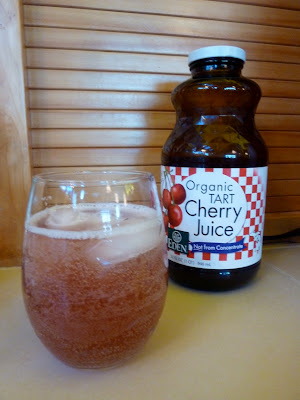
Pictured is bubbly water with organic tart cherry juice.


So if you have a soda habit, try some bubbly water instead. It can make a drastic difference in your health and longevity. Salute!

Wednesday, February 11, 2015

The EPA Takes A Small Step To Protect Honey Bees Should They Do More Heres What You Can Do!

A local honeybee enjoys a calendula in my organic garden.

Follow Foods For Long Life on FACEBOOK.

Colony Collapse Disorder
Colony collapse disorder (CCD) describes the drastic decline of honey bees.  Although honeybee populations have had mysterious declines throughout history, recent dramatic declines have been alarming. Between 2012 and 2013, U.S. beekeepers lost 45 percent of their colonies. Scientists fear that this could lead to widespread crop failure in the very near future.

Why you should Care about the Honey Bees
I must admit, I didnt think much about honeybees while growing up in New York City. Most city people classify insects as annoying "bugs". Now that we living in a farming community, my views have certainly changed. But bee populations effect everyone. They are responsible for pollinating $15 billion dollars of crops - about one third of the food we eat, like certain berries, fruits, tree nuts, and vegetables.

Heres an example. Did you ever wonder why almonds are so expensive? Well, they are completely dependent on honeybees for pollination. In fact they use 60 percent of all managed honey bee colonies in the United States or 1.4 million colonies of honeybees! Colony collapse disorder has severely affected the almond industry. So if you enjoy eating almonds, putting almond milk on your cereal, or eating almond butter sandwiches, you should care about honey bees.
Other crops that require honeybee pollination include apples, oranges, lemons, limes, broccoli, onions, blueberries, cherries, cranberries, cucumbers, cantaloupes, carrots, and avocados, to name just a few.


Almonds are completely dependent on
 honey bees for pollination.

What Causes Colony Collapse Disorder?
Although no one is exactly sure what is causing CCD, the main culprits, according to the USDA,  are:
* Pathogens: Several pathogens have been linked to CCD. Nosema (a gut fungi) and Israeli Acute Paralysis Virus are two candidates although no one single pathogen has been found to cause the majority of CCD incidents.

* Parasites: Varroa mites have been identified in many of the affected honeybee colonies. It is not known if these mites contribute to CCD or if they are merely acting as a carrier of a pathogen.

* Management stressors: Yes, bees can be stressed out too! Because of local scarcity, bees are transported to locations throughout the country to pollinate crops. This, in addition to apiary overcrowding, creates stress for the bees.

* Environmental stressors: These can include poor nutrition due to the scarcity or lack of diversity of nectar and pollen and limited access to good, uncontaminated water. But the big spotlight, most recently, has been on their exposure to insecticides.

Insecticides - A Big Problem!
One particular class of pesticides, neonicotinoids, which include chothianidin, thiamethoxam, and imidacloprid, have been accused of causing CCD. More than 30 separate scientific studies linking neonicotinoids to falling bee populations prompted the European union to vote to ban the use of these pesticides.

Recently in a Portland suburb, the Daily Beast reported that more than 50,000 bumblebees died in a Target parking lot after being exposed to trees that were treated with neonicotinoids. Unlike the EU, the EPA took a much smaller action to address the toxic effect of these chemicals on bees.

Are you Kidding Me?
Rather than banning these pesticides, the EPA has developed new labels to warn users that some pesticides may kill honeybees (can you hear me yawning?) Yes, we know how few people read labels and, even if they did, wouldnt hesitate to use a product that theyve grown familiar with just because it says that it "can kill bees and other insect pollinators." If they cared that much, they would already have an organic garden and wouldnt think of using these toxic chemicals to grow their food.

What you Can Do!

Representative Earl Blumenauer of Oregon and Representative John Conyers of Detroit introduced  a bill to put a temporary ban on all suspect insecticides until the EPA thoroughly understands pesticides true effect on pollinators. Its no surprise that the GMO manufacturers (whose seeds were develop to withstand these toxic chemicals) are against this measure. And Im sure the chemical companies who manufacture the pesticides are lining up.

Earl Blumenauer and John Conyers asks that everyone contact their representative and encourage them to include the "Save Americas pollinators Act"  in the Farm Bill.


Help save me!
Contact your representative now!

More to be Aware of when you Shop for Plants
Are you shopping for bee-friendly plants like sunflowers for your garden? A report from the Earth and the Pesticide Research Institute claims that some garden plants sold at Home Depot, Lowes, and other garden centers have already been pre-treated with these bee-killing pesticides! 

Products to Avoid
Heres a list of products that contain neonicotinoids. To avoid killing bees, the Center for Food Safety recommends you avoid these common home and garden products.

Is Organic Farming the Answer?
Its difficult to farm organically. I know that firsthand. My husband and I are one of the very few organic vineyards in Sonoma county (only 3 percent of the roughly 1,800 vineyards in Sonoma county are organic). Its a constant struggle fighting weeds, mildew and other problems that arise. Organic solutions to these issues are also more expensive. But in the end, its worth it. Even though wine grapes dont require pollination, our land is just buzzing with bees! They like it here. They know our flowers and vegetable gardens are safe to buzz around because they are free of these horrible chemicals. 

So when you are selecting seeds or plants for your garden or buying fruits and vegetables in the store, select organic when you can. It encourages organic agricultural practices which is not only good for your health and the health of the planet, but its good for the bees!


Check out my eBook

Sunday, February 8, 2015

How fast should I lose weight

Siba Guzha
HELLO. When we join a gym or decide we want to lose some excess weight, we tend to want to do it in the fastest time possible. We go on yoyo diets and extreme exercise routines to lose the weight.

But as anxious as you may be to shed pounds rapidly, there is peril in falling for rapid weight-loss plans such as fasting diets or juicing schemes. Severely slashing calories may help you flush pounds fast in the beginning, but in the long run you compromise your health--and even your future weight.

Safe weight loss happens at the rate of 500grams to 1kg per week, according to Harvard Medical School, so dropping 5kgs should take between five and 10 weeks. Any plan that promises more is probably a bad decision, regardless of celebrity endorsements and other tricks.

So what’s the problem with rapid weight loss? Getting thinner should make you healthier, right? First of all, when you lose more than a couple of pounds per week you lose muscle and bone tissue along with fat. Bone mass is something you want to preserve or increase, not diminish, in order to keep your frame strong and avoid osteoporosis as you grow older.

Losing muscle mass is also problematic for multiple reasons. Obviously, your body grows weaker with less muscle, and everyday tasks may become more difficult to perform. Plus, muscle burns calories 24 hours a day, so the more muscle tissue you have, the faster your resting metabolism becomes. While losing muscle may lead to a temporary dip in the scale, it could slow your metabolism enough to make weight maintenance more difficult later on.

Beyond muscles, your metabolism is likely to wind down significantly with extreme weight loss. Your body enters starvation mode when deprived of adequate calories because it strives to conserve needed energy. As soon as you start to eat a normal diet again (and you will), the pounds will pile right back on. And you may end up weighing more than when you started dieting in the first place.

The healthiest way to lose the recommended weight per week is to eat about 1,500 calories per day if you’re female or about 2,000 calories per day if you’re male. This will help ensure adequate nutrition while still allowing you to easily burn more calories than you eat each day, which is how you lose weight. Even with a sensible eating plan, however, you may lose muscle mass without working out. Therefore, it’s especially important to perform cardiovascular exercise, which burns plenty of calories while toning muscles, and strength training, which builds new muscle as well as stronger bones. And ladies, don’t worry about adding too much bulk--women usually lack the hormones necessary to build massive brawn.

If you need more incentive to avoid deprivation diets and lose weight the healthy way, consider your sanity. You’ll be much happier on a reasonable diet and exercise plan than with an unsatisfying crash diet. Come in and speak to one of our professionals about a healthy diet plan for you. Remember this is not a quick fix but an overall lifestyle change to lead you to a healthier, happier YOU! Stay Fit!

Siba Guzha is a fitness trainer at Body Focus Gym Executive. 1st Floor Meikles Mutare. Contact him on : Cell: 0772 789 110: Tel 020 64712 ext 218 or send feedback to Email: bodyfocusgym@gmail.com.