Showing posts with label other. Show all posts

Friday, February 27, 2015

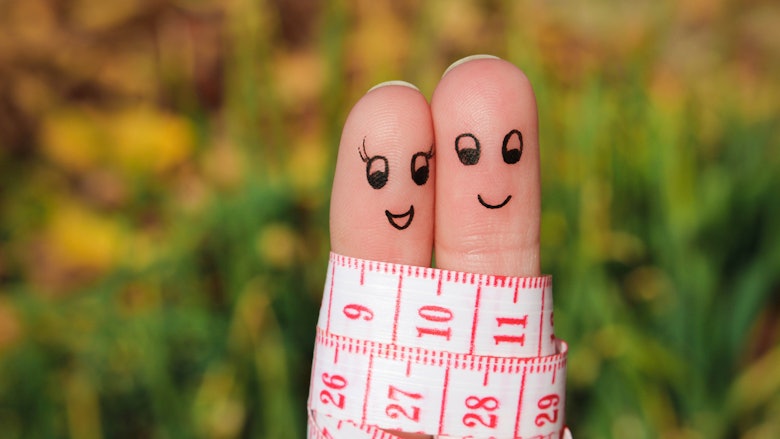
Dieting With A Partner Doesnt Work — One of You Will End Up Lighter The Other Upset

Dieting is a miserable practice that can easily leave anyone irritable, unhappy, and hungry, so it makes sense to think that dieting with a partner will make it easier and more enjoyable. Well, you might want to hold off on the buddy system for now; a new study found that dieting with a partner doesn’t work.
The study, published in Eating Behaviors, surveyed 50 overweight couples that had made New Year’s resolutions to lose weight. The survey asked questions about how much confidence the participants had in controlling their food portions when they were alone and when they were eating with company. Participants were asked if they agreed with statements like “When eating out with friends, they influence how much I eat” and “I feel confident that I can leave food on my plate if I think a serving size is too large.”
Overall, the study found that when couples diet together, only one person is successful. The main reason for this is because as one partner is accomplishing their goal, the other loses confidence in their own efforts. It seems counter-intuitive, because partners are supposed to be support systems for one another, but it turns out that being close to someone who is successful in a similar goal undermines the other’s confidence.  It also appears as if women have a disadvantage in couple’s dieting form the get-go; the women who participated in the study reported being less confident then men in their ability to control portions.
It’s easy to scoff at the outcomes of this study, especially for those who view dieting as an exercise in vanity. However, this information is useful for those who are dieting in order have a healthier lifestyle.  And it’s not easy! As author of the study Jennifer Jill Harman points out, portion sizes have increased 700 percent over the last 30 years, so understanding portion control and eating healthier is more important than ever. So for those of you who are serious about losing weight, do yourself a favor and don’t ask the significant other to join in your diet…you’ll be more successful on your own.
By Alanna Greco
Source: http://www.bustle.com/articles/54204-dieting-with-a-partner-doesnt-work-one-of-you-will-end-up-lighter-the-other

Sunday, February 8, 2015

Lose Weight Before Trying Other Sleep Apnea Treatments

CPAP masks have become much more comfortable than in years past, doctors say. But most of the time, theyre probably not the first thing to try for sleep apnea. iStockphoto.com


So your snoring is driving your partner crazy. Does that mean youre destined for one of those awkward-looking sleep apnea masks?

Not so fast, doctors say. Many snorers dont have sleep apnea, which causes a person to frequently stop breathing for brief periods during sleep. Its a big cause of chronic sleepiness and has been linked to a variety of health problems. Sleep apnea can also make a sufferer miserable.

"Poor concentration, daytime sleepiness, high blood pressure, certainly overweight, people who are complaining about a lot of fatigue, all of those ought to make us wonder if a patient has sleep apnea," says , president of the American College of Physicians, which issued new on treatment of sleep apnea Monday. They were published online in Annals of Internal Medicine.

The big surprise here is that the doctors didnt find any evidence that boosts a persons risk of death. Thats been commonly assumed to be true.

But the guideline committee didnt find any research that measured risk of death, heart disease or stroke in people with sleep apnea. "I had gotten it into my head that sleep apnea increased the risk of premature death," Cooke told Shots. "That turns out not to be true."

The reviewers also found out that surgery didnt help most people, even though its been heavily promoted for sleep apnea.

"Surgery should be used as a third or fourth option if its used at all," Cooke says. It can cause short-term problems like excessive bleeding, and long-term problems with swallowing. "Its not the get-it-over-with panacea that people sometimes think it is."

For most people, the guidelines say, the first and best treatment is simple and obvious — lose weight. "Not everyone with sleep apnea is overweight, but most patients are," Cooke says. Losing weight gets rid of fat that blocks the windpipe. It would "not only fix your sleep trouble, it would help your cholesterol, it would help your knees, your clothes would fit better and you would be a happier person," she says.

Patients who still have symptoms at that point might need to go to a sleep clinic and do an overnight test for apnea.

For people who are diagnosed by a sleep clinic, the No. 2 treatment of choice is CPAP, or continuous positive airway pressure.

It involves a pump that delivers pressurized air to a patients nose and keeps the airway open. But it requires wearing a tight-fitting face mask during sleep, which really bothers some people. The studies reviewed here show as many as one-third of people bail on CPAP.

Dont fear the CPAP mask, says , a sleep physician and president of the American Academy of Sleep Medicine. "I can tell you that CPAP is a lot more comfortable than it was 10 or 15 years ago."

The machines are a lot quieter, Badr tells Shots, and no longer sound like theres a hurricane in the bedroom. But the biggest improvement is the addition of heated, moist air. Without it, the inside of the nose gets dried out and generates secretions to compensate. "The whole airway becomes congested."

CPAP does have its challenges. "Try to sleep with your eyeglasses; it takes getting used to," Badr says. A doctor has to invest time in explaining why its worth trying, he says, and then follow up and troubleshoot any problems.

For patients who just cant hack the mask, the guidelines suggest trying something called a mandibular advancement device that moves the lower jaw forward a bit, making more room in the back of the throat. Its a little like a bite guard. But CPAP should come first, Cooke says. "CPAP corrects more of the abnormalities that are seen in a sleep study."

Badr is also a big supporter of CPAP. "At the end of the day, what were trying to do is pressurize that airway, one way or another, and keep it open," he says. "Thats the mainstay of treatment, and it will be."